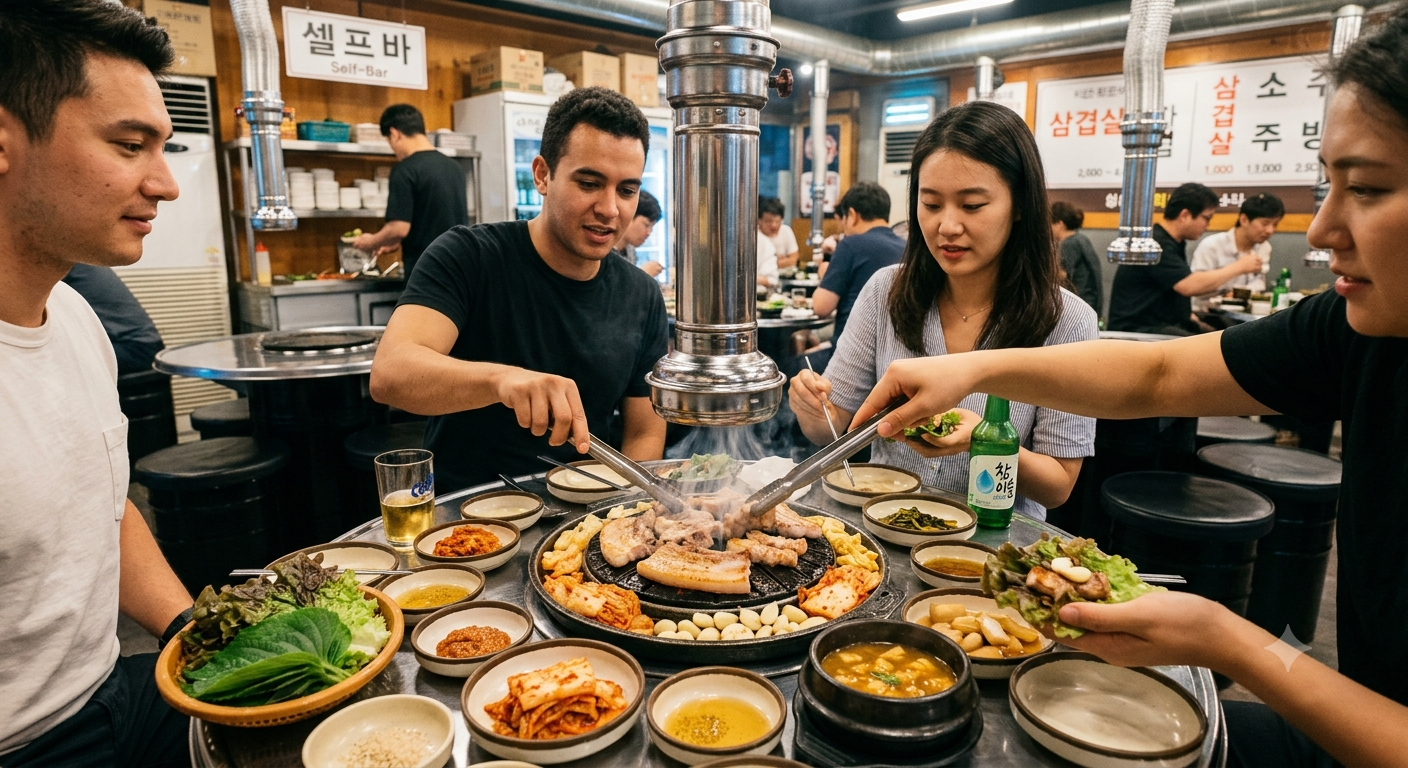
Korean Barbecue (K-BBQ) is much more than just a meal; it is an interactive social ritual and an essential culinary rite of passage for anyone visiting South Korea. Centered around sizzling cuts of meat grilled right at your table, K-BBQ combines rich savory flavors, fresh wrap vegetables, and an array of side dishes.
For international travelers, navigating a traditional Korean barbecue restaurant can sometimes feel overwhelming—from understanding the minimum order requirements to building the perfect bite. This comprehensive guide covers everything you need to know to dine like a local.
Understanding Popular K-BBQ Meat Cuts
While pork belly is the undisputed favorite across Korea, traditional barbecue joints offer various cuts of pork and beef, each with distinct textures and flavors.
Pork Cuts
- Samgyeopsal (Pork Belly): Uncured, thick-cut pork belly with alternating layers of meat and fat. It cooks to a perfect crispy texture on the outside while remaining tender inside.
- Moksal (Pork Shoulder / Neck): Leaner than pork belly with a rich, meaty flavor. Great for those who prefer less fatty cuts.
- Dwaeji-Galbi (Marinated Pork Ribs): Tender pork ribs marinated in a sweet and savory soy-garlic sauce. Because of the sugar in the marinade, this cut requires frequent turning on the grill to prevent burning.
Beef Cuts
- Chadolbagi (Thinly Sliced Beef Brisket): Paper-thin slices of beef brisket that cook in mere seconds on a hot plate.
- Galbi (Marinated Beef Short Ribs): High-grade beef short ribs scored and soaked in a soy-based marinade. Extremely tender and flavorful.
- Kkot-Galbisal (Beef Ribeye / Boneless Short Rib): Heavily marbled cuts cooked unmarinated to highlight the natural richness of the beef.
The Step-by-Step K-BBQ Dining Process

1. Ordering Rules (The 1-Serving Per Person Rule)
At almost every K-BBQ restaurant in South Korea, there is a mandatory minimum order policy: you must order at least one serving (1 In-bun) of meat per person.
- One serving usually ranges between 150g to 200g of meat.
- If you are a party of two, you must order at least two servings total. You can typically mix cuts (e.g., one serving of Samgyeopsal and one serving of Moksal), provided the restaurant allows single-serving orders per cut.
2. Banchan (Side Dishes) and Self-Service Bars
Once you order, your table will be covered with complimentary side dishes (Banchan), including Kimchi, pickled radishes, soybean paste stew (Doenjang-jjigae), and fresh lettuce leaves.
- Self-Bar (셀프바): If you run out of lettuce, garlic, or sauces, look around the restaurant for a “Self-Bar.” You are encouraged to refill your side dishes as many times as you like for free.
3. Grilling the Meat
In upscale restaurants, servers will grill and cut the meat for you. However, at local neighborhood spots, grilling is a DIY experience.
- Place thicker meats like Samgyeopsal in the center of the grill.
- Place garlic cloves and Kimchi along the outer edges so they roast in the rendered pork fat without burning.
- Use the provided metal tongs and cooking scissors to snip the meat into bite-sized pieces once it is halfway cooked.
4. How to Build the Perfect Wrap (Ssam)
To eat K-BBQ like a true Korean local, master the art of the Ssam (wrap):
- Lay a fresh lettuce leaf or perilla leaf flat on your palm.
- Add a piece of grilled meat dipped lightly in sesame oil/salt or Ssamjang (savory red soybean paste).
- Layer grilled garlic, a slice of kimchi, or pickled scallions on top.
- Fold the leaf into a neat, compact bundle and pop the entire bite into your mouth at once.
5. Finishing with K-Fried Rice (Bokkeumbap)
Never leave a K-BBQ meal without the mandatory final step: Bokkeumbap (Fried Rice). After finishing your meat, ask the server for Bokkeumbap. They will bring rice, seasoned seaweed, sesame oil, and Gochujang paste, stir-frying it directly on your hot grill plate using the remaining meat bits and crispy kimchi.
Essential Etiquette Tips for Korean BBQ
- Changing Grills: Different types of meat require different grill plates. Non-marinated meats (Samgyeopsal) use flat iron plates, while marinated meats (Galbi) use wire mesh grills over open charcoal. If you switch meat types, ask the server to change your grill (“Bulpan gyoche-hae juseyo”).
- Smell Prevention: K-BBQ smoke gets everywhere. Most restaurants provide hollow drum chairs or plastic storage bags under your seat. Stash your coats, jackets, and bags inside before you start cooking to keep them free from smoke smell.
- Exhaust Pipes: Pull the hanging metal exhaust hoods down close to the grill while cooking to capture smoke, but lift them slightly when turning meat to keep your view clear.
Frequently Asked Questions (FAQ)
Can solo travelers eat K-BBQ in Seoul?
While K-BBQ is traditionally a group dining experience, solo travelers can easily dine at standard spots by ordering two servings of meat for themselves. Additionally, specialized solo-dining BBQ spots (Hon-bap BBQ) are increasingly popular in areas like Hongdae and Gangnam.
Is Ssamjang sauce spicy?
Ssamjang is a mild mixture of fermented soybean paste (Doenjang), chili paste (Gochujang), sesame oil, and garlic. It offers a rich, savory flavor with very low spice levels, making it accessible for almost all palates.
Should I drink alcohol with K-BBQ?
While not mandatory, pairing K-BBQ with Soju or a Somaek mixture (Soju + Beer) is a classic Korean social tradition. For non-alcoholic options, order Cider (Korean lime-lemon soda) or Hwan-ta.